The View Is Not the Room: Reconsidering What a Ryokan Window Owes You

Photo by Photo by Yosuke Ota on Unsplash on Unsplash
The reservation screen is designed to make you look outward. A thumbnail of a maple valley, a ribbon of coastline, a garden raked into stillness—and beneath it, a rate. The room without that thumbnail sits lower on the page, and the implication is plain: you are being offered less. For many American travelers making a first trip to Japan, the logic feels unassailable. You have crossed an ocean. Why would you not pay for the view?
This is an argument for doing the opposite, at least sometimes. Not because scenery is worthless, but because the view has become a proxy for qualities it cannot measure. A ryokan is not a scenic overlook with a bed attached. It is a sequence of rooms, baths, meals, and small courtesies, and the window is only one instrument in that sequence. Occasionally it is the least important one.
The View Is a Rental; the Room Is the Purchase
There is a useful distinction to be made between what you look at and what you inhabit. A view is a rental: you enjoy it for the duration of your stay, and then you leave it behind. The room itself—its proportions, its light, its acoustics, the distance from your futon to the bath—is the purchase. It shapes how you sleep, how you dress, how you move through the evening.
In many traditional inns, the highest-priced rooms are those with an outward prospect, and the difference can be substantial. That premium is real, but it is not always proportionate. A room facing a parking lot, a service courtyard, or a neighboring roofline may be identical in size, finish, and bath access, and quieter by several decibels. You are not buying a lesser ryokan. You are buying the same ryokan without the markup for scenery.
What a Window Actually Does in a Ryokan
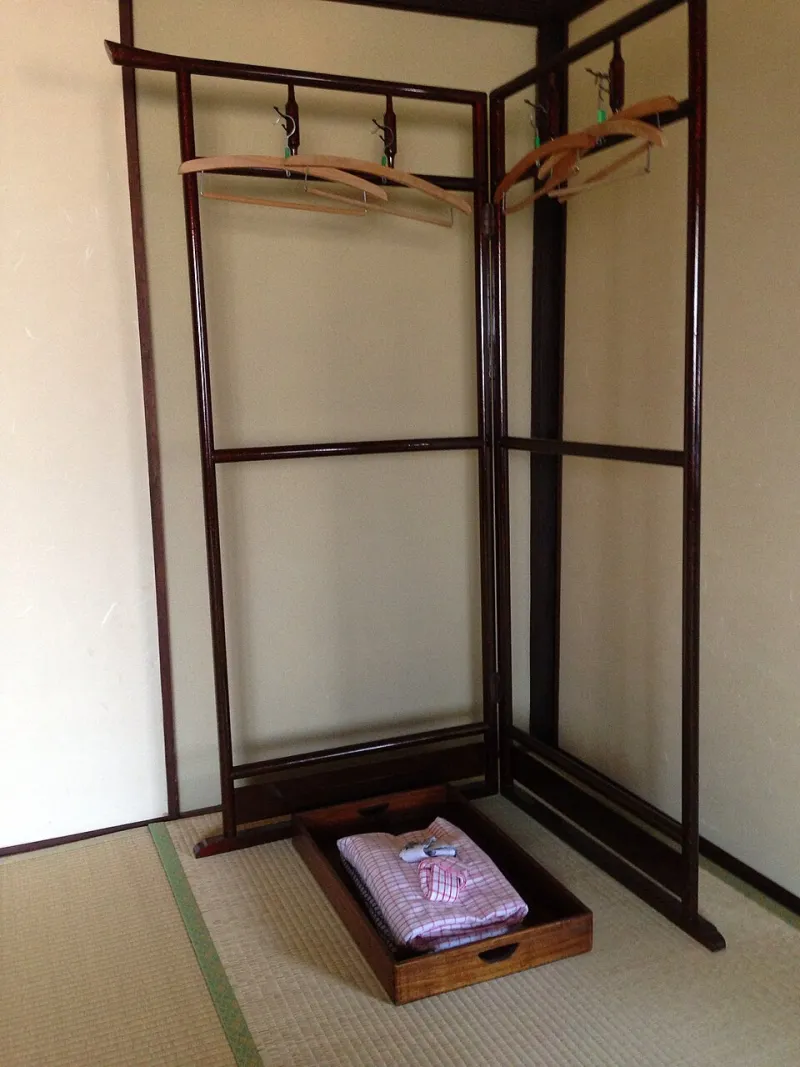
Japanese inn architecture treats the window as a frame, not a panorama. Shoji diffuse light rather than open a vista; engawa verandas mediate between interior and garden; a small courtyard may be designed to be glimpsed at an angle rather than surveyed. The intended effect is often intimacy, not spectacle. A garden view at a city inn may be a composed sliver of moss and stone, beautiful precisely because it is contained.
This matters for expectations. Travelers arriving from the American West, where the lodge with the mountain view is a familiar ideal, may assume the ryokan equivalent is a broad, unobstructed prospect. Often it is not. The most memorable window in an older inn may be a narrow one onto a tsubo garden, or a bath window fogged at the edges. The view is a component of atmosphere, not the atmosphere itself.
The Arithmetic of Aspect
Consider what the view premium competes with. At many inns, the difference between a garden-facing room and an interior one is roughly the cost of a private bath reservation, a better grade of sake, or a second night elsewhere on the trip. For a two-night stay, it may equal a substantial portion of the kaiseki upgrade. These are not trivial trade-offs. A traveler who books the prospect by default may be spending the budget on the one element they will use least—minutes at the window—rather than on the bath they will enter three times.
There is also the matter of time. A ryokan evening is deliberately occupied: arrival, tea, bath, dinner, bath again, sleep, morning bath, breakfast. Daylight viewing hours are shorter than the booking photo suggests. In winter, particularly, the window may be dark by the time you settle in. The view is a morning and late-afternoon pleasure, not a constant companion.
Four Audits That Matter More
If the window is not the deciding factor, what is? Four things repay closer reading of the listing.
Bath quality and access. Is the onsen natural or circulated? How many baths, and are they rotated by gender or time? A room without a view but with a superb bath and generous bathing hours is usually the better night.
Room proportions. Traditional rooms are measured in jo, and the number matters more than the aspect. A well-proportioned eight-jo room with a tokonoma alcove and a proper veranda will feel more generous than a larger room with awkward furniture.
Service rhythm. Does the inn serve dinner in the room or a dining area? What time is the last bath? When is checkout? These determine the tempo of your stay far more than what lies beyond the glass.
Quiet. Ask, or infer, where the room sits relative to the elevator, the kitchen, and the road. An inward-facing room is often the quietest in the building—and quiet is the amenity guests remember without being able to name.
When the View Earns Its Premium
None of this is an argument against scenery. There are inns where the view is integral: a coastal property where the bath faces the sea, a mountain retreat where the autumn foliage is the reason the inn exists, a garden that has been tended for a century and is meant to be sat with. In those cases, the prospect is not decoration; it is part of the hospitality. The test is whether the view is composed—designed to be looked at from a particular room at a particular hour—or merely available. A room that happens to face a famous peak is different from an inn built around the sight of it.
The Room You Will Actually Remember
Ask returning guests what they recall of a ryokan and they rarely describe a vista. They describe the temperature of the water, the sound of rain on the roof, the way the futon was laid, the silence of a corridor at dawn. These are the things a view cannot supply and a parking lot cannot spoil.
For a first visit, the conventional advice—book the view—is not wrong so much as incomplete. For a second or third, it begins to look like a habit. The interior room is not a compromise. It is a different, often more honest way to stay: closer to the working life of the inn, easier on the budget, and quieter at the hour when quiet matters most. The window will show you something. The room will show you why you came.