A Night at Floor Level: What to Expect from a Ryokan Futon

Photo by Photo by Se. Tsuchiya on Unsplash on Unsplash
The Question Beneath the Question
A first stay at a traditional Japanese inn often brings a practical worry that travelers are reluctant to voice: what if I cannot sleep on the floor? The concern is understandable. In the United States, we tend to treat the bed as a fixed object—a mattress on a frame, a box spring, a familiar height. A ryokan futon is something else. It is a layered bedding system placed on tatami, and it asks the guest to accept a different relationship between body and room.
That difference is not a test of endurance. It is part of the inn’s rhythm, and it can be a comfortable one when approached with a little preparation.
The Bedding Is a System, Not a Single Mattress
A ryokan futon is usually composed of several parts: a shikibuton, or sleeping mat, laid directly on the tatami; a mattress pad or additional underlayer in many inns; sheets; a kakebuton, or quilted coverlet; and a pillow. Staff typically set the bedding after dinner and put it away in the morning, which is why the room may feel open and uncluttered during the day.
The shikibuton is firmer than most American mattresses. It is not a camping mat, nor is it a thin blanket over hardwood. On tatami, it has a modest amount of give, but side sleepers may notice pressure at the hip and shoulder. Back sleepers often adapt quickly. If you know that you prefer a soft surface, that preference is worth mentioning before arrival rather than after the first restless night.
Tatami Changes the Equation
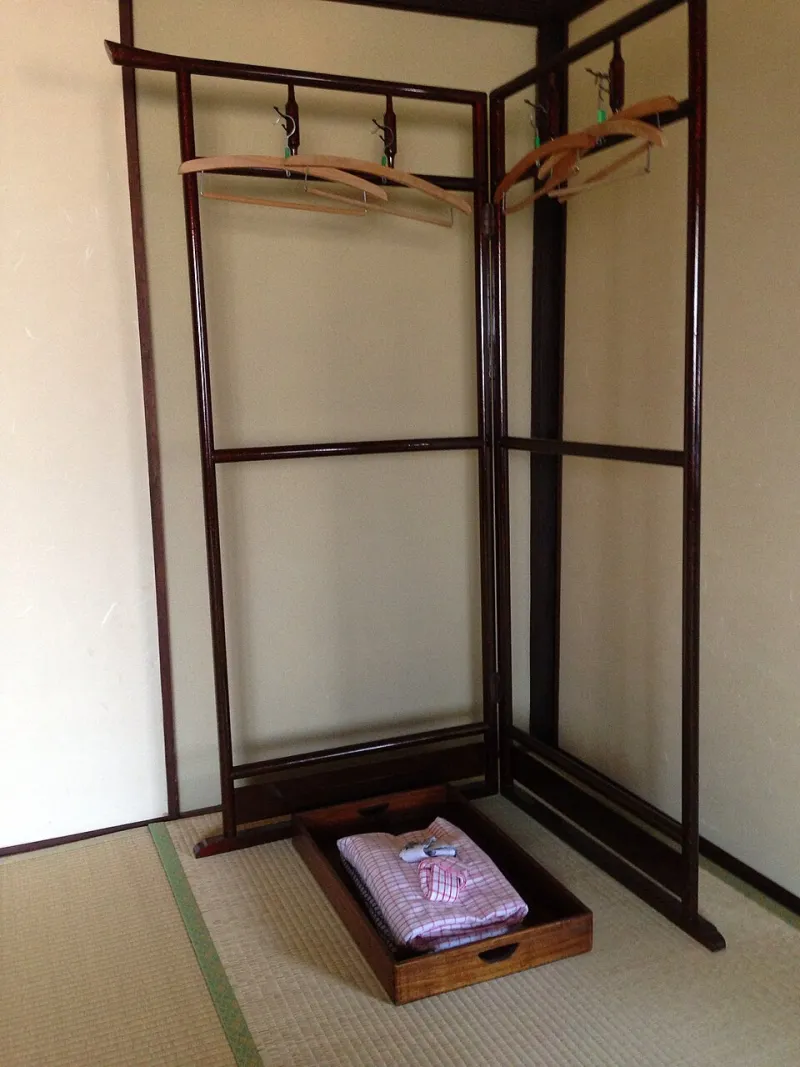
Tatami is woven rush grass over a compressed core. It has a slight resilience, a distinct scent in some rooms, and a sound underfoot that is quite unlike carpet. Shoes are removed at the threshold, and the floor becomes part of the living space. Sleeping at this level can feel unfamiliar at first, but it also changes how the room is experienced: the ceiling seems higher, the shoji screens feel closer, and the sounds of the inn—footsteps in the corridor, water in the bath, wind against the paper—arrive differently.
For guests with mobility concerns, the low position is the more important consideration. Getting up from the floor can be difficult for anyone with knee, hip, or back limitations. This is not a reason to avoid ryokan altogether, but it is a reason to ask direct questions when booking.
Temperature, Air, and the Quiet Hours
Japanese inns are often well heated in winter and cooled in summer, but the controls and the ventilation may differ from what you expect in a US hotel. Rooms can feel dry in winter and humid in summer. A light yukata is provided for sleep, and most guests wear it under the covers rather than sleeping in heavier clothing.
If you tend to sleep cold, ask for an extra blanket or a second kakebuton. If you sleep hot, ask whether the room’s air conditioning can be adjusted or whether a fan is available. These requests are ordinary. The front desk would rather hear them at check-in than learn at breakfast that a guest spent the night uncomfortable.
Pillows and the Small Negotiations
Ryokan pillows are frequently firmer or lower than American hotel pillows. Some are filled with buckwheat hulls and can be adjusted by removing or adding filling; others are smaller and more decorative than functional. If you need a softer pillow or a second one, say so politely. A useful phrasing is simple: “I am not used to a low pillow. May I have another pillow, if one is available?”
The same approach works for bedding. “The futon is a little firm for me. Would it be possible to add an extra pad?” This is not an unusual request in many inns, though availability varies. The key is to frame it as a preference rather than a complaint. Hospitality in a ryokan tends to respond well to clear, courteous communication.
When It Is Reasonable to Ask for a Bed
Some ryokan offer Western-style rooms or rooms with beds, particularly in newer wings or annexes. If you have a medical need, a mobility limitation, are pregnant, or simply know from experience that floor sleeping will ruin a multi-night stay, ask before you book. Do not wait until arrival to request a bed if the room category does not include one. A bed is not a failure of cultural immersion; it is a practical choice that many traditional inns accommodate.
If a bed is not available, extra padding is often the middle path. It preserves the tatami experience while softening the surface. Ask whether the inn can provide an additional shikibuton or mattress pad at the time of reservation, and confirm any charge.
The Rhythm of the Floor
Sleeping low is part of why a ryokan night feels different from a hotel night. The futon is put away, the room returns to its daytime proportions, and the boundary between rest and the rest of the inn is less rigid. Guests who wake early may hear the first quiet movements of the staff, or see the light change through the shoji. It is not necessary to romanticize this. It is simply a different way of sleeping, and it rewards a flexible attitude more than a stoic one.
The futon does not hate you. It is not asking you to prove anything. It is asking you to lie down at the level of the tatami, to notice the room in a different way, and to speak up if your body needs something else. That combination—respect for the form, honesty about your own comfort—is the most useful preparation for a first ryokan night.