The Folded Invitation: A Guest’s Guide to the Ryokan Yukata
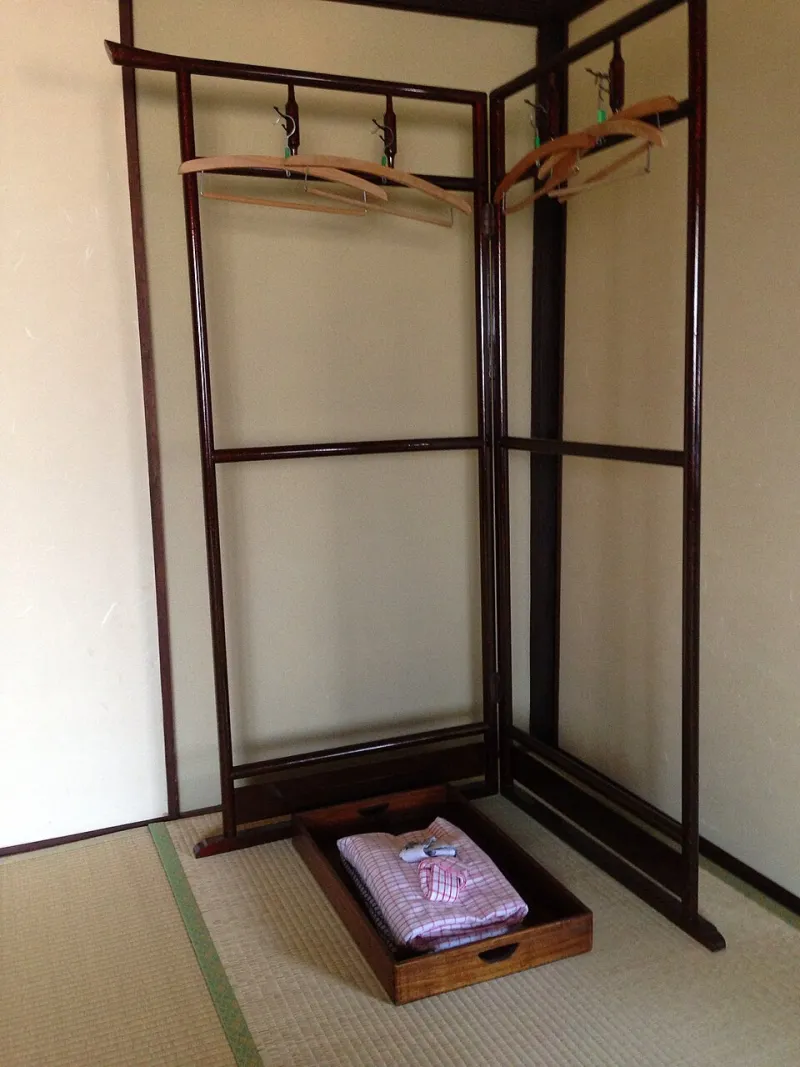
Photo: Kiwi He from Taipei, Taiwan, CC BY-SA 2.0, via Wikimedia Commons
Few objects in a Japanese inn carry as much quiet instruction as the yukata folded in the closet. It arrives without a note, often beside a small tray of amenities, and yet it tells a guest a great deal: that the bath is near, that dinner will soon be served, that the pace of the evening has already begun to slow. For travelers from the United States, the first instinct is often to treat it as a hotel bathrobe—useful after a shower, perhaps acceptable on the way to an ice machine. At a ryokan, the garment is more particular than that. It is casual clothing with a formal context, a piece of cloth that grants permission to move through the inn in a different register.
The Yukata Is Not a Bathrobe
A bathrobe is designed for privacy and absorption. A yukata is designed for circulation. It is a simple cotton robe, unlined and usually light, worn after bathing and during leisure hours at an inn. In many traditional ryokan, guests are encouraged to wear it within the building: from the room to the communal bath, back to the room, and sometimes to dinner if the meal is served privately or in a designated dining area. In other inns—particularly larger modern resorts—the yukata may be intended only for the room and the bath corridor. The distinction matters.
The reliable course is to observe the inn’s own cues. If the yukata is laid out with a matching belt and a note about dinner, it is likely meant to be worn. If the room also provides pajamas or a separate loungewear set, the yukata may be bathwear only. When in doubt, ask at the front desk. A question phrased simply—“May I wear the yukata to the dining room?”—is never out of place, and the answer will tell you something about the inn’s formality.
The Tie That Matters
Yukata are wrapped left side over right. This is not a matter of handedness or preference; the opposite arrangement, right over left, is associated with the dressing of the deceased and is considered inappropriate for the living. The belt should sit at the waist, snug enough to hold the robe closed but not so tight that it restricts breathing or creases the fabric. Women often tie the belt slightly higher; men generally wear it lower. A simple flat knot at the front or side is sufficient. Elaborate bows are unnecessary and can look out of place.
The hem should fall around the ankle. If the robe is too long, do not hike it up with a second belt or carry the excess in your hand. Ask the front desk for a shorter size or for assistance. Many inns keep a range of lengths, and a proper fit makes the garment feel less like a costume and more like clothing.
Pattern as a Quiet Signal
Yukata patterns are not merely decorative. At a traditional inn, one often sees small geometric motifs, indigo dyes, seasonal flowers, or abstract patterns in restrained colors. These suggest a house that favors subtlety and continuity. Bright tropical prints, large florals, and coordinated family sets are more common at modern resort hotels, where the yukata functions partly as leisurewear and partly as a visual amenity. Neither style is wrong, but the pattern can help a guest read the room.
A yukata provided in the room may differ from one provided at the bath. The bathhouse yukata is often plainer and intended for brief transit. The room yukata may be slightly more finished. If an inn provides a tanzen—a padded jacket worn over the yukata in cooler months—it is signaling that the corridors are cold and that the garment is meant to be worn beyond the bath.
Where the Yukata May Go
Within the inn, the yukata is generally acceptable in the room, in corridors leading to the bath, and in bathhouse changing areas. It should not be worn into the bath itself. At many traditional ryokan, it is also acceptable in private dining rooms and, at some inns, in communal dining areas. At others, particularly those with a more formal restaurant, guests are expected to change into everyday clothes for dinner. The presence of a dining room rather than in-room service is a useful clue.
Outside the inn, the rules tighten. In some onsen towns, guests may walk between the inn and a public bath in yukata and geta, but this is a local custom rather than a universal permission. Wearing a yukata into a shop, train station, or restaurant is generally not appropriate unless the inn or town explicitly encourages it. Slippers, too, are indoor footwear; they should not be worn outside or on tatami in some contexts. The general principle is containment: the yukata belongs to the inn’s interior world.
A Word on Fit, Layers, and Laundry
Traditional yukata are worn without undergarments, but international guests should feel free to wear light, invisible underwear if it makes them comfortable. The point is discretion, not doctrine. Avoid wearing the yukata as sleepwear if the inn provides pajamas; the cotton is intended for short-term wear, and sleeping in it can leave the robe crumpled for the next guest’s arrival. If you stay multiple nights, hang the yukata to air rather than stuffing it back into the closet. Do not take it home. It is part of the room, like the teapot or the futon.
What the Closet Reveals
A yukata in the closet is a small essay on hospitality. A traditional inn may provide a simple indigo robe, a neatly tied belt, and a short note on how to wear it. A modern resort may offer a brightly patterned robe, a size chart, and a laundry bag. Neither is inherently better, but the details reveal the inn’s assumptions: whether guests are expected to know the customs or to be gently guided into them. For the traveler, the yukata is a chance to accept the inn’s rhythm rather than import a hotel habit. Worn correctly, it is not a costume. It is a quiet agreement to belong, for a night, to the house that folded it.


