The Empty-Handed Arrival: Forwarding Luggage Between Japanese Inns
Photo: senngokujidai4434, CC BY 2.0, via Wikimedia Commons
There is a particular sound at a rural onsen station in the late afternoon: the soft wheel of a single carry-on, the shuffle of a coat being unbuttoned, and then nothing. No hauling, no counting of stairs. The suitcase that left Tokyo that morning is already waiting in the room, and the guest walks to the inn with both hands free. This is not luxury in the conventional sense. It is the absence of friction, and in Japan it is remarkably easy to arrange.
Takuhaibin, Briefly Explained
Japan's parcel-forwarding system, known as takuhaibin, is operated by several national carriers, most visibly Yamato Transport and Sagawa Express. It is not a specialty service for tourists. It is how the country moves golf bags, gifts of fruit, ski equipment, and yes, suitcases, usually on a next-day basis between major cities. Counters sit in airport terminals, convenience stores, and the front desks of countless hotels and ryokan.
The mechanics are simple. You present the bag, fill in a short waybill, and name the destination. Delivery to most of Honshu, Kyushu, and Shikoku is typically next day if the bag is accepted before the carrier's afternoon cutoff; Hokkaido, Okinawa, and remote peninsulas generally add a day. A standard suitcase within the usual size limit (length plus width plus height of about 160 centimeters) costs a modest flat fee, often in the range of a few thousand yen between major cities. Payment can usually be made at the counter, or charged to your room by an inn that offers the service.
Why It Fits a Ryokan Trip Especially Well
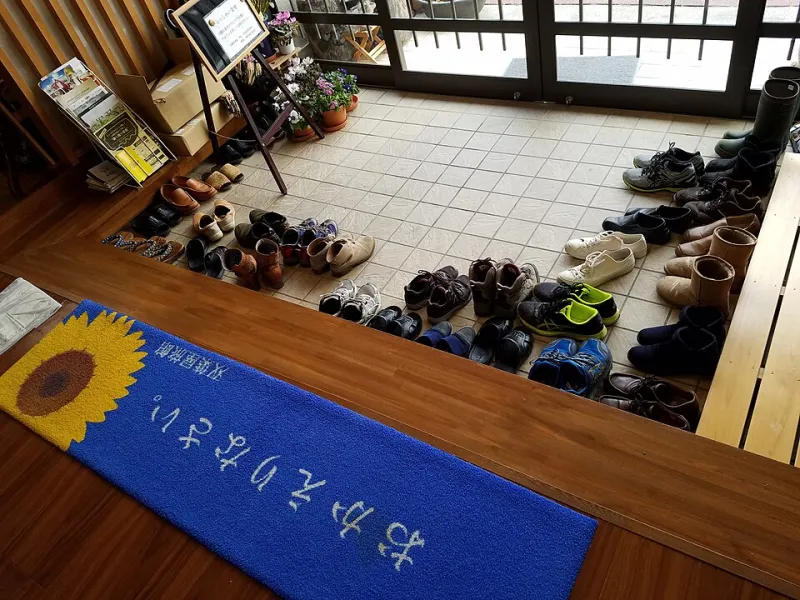
A ryokan is not a hotel with a service corridor and a freight elevator. It is often a wooden building with a narrow genkan, a step up, a stone path, and stairs to the second floor. Your bag will be carried by hand, sometimes by a person considerably older than you. Traditional inns also tend to have small rooms where a large suitcase occupies the floor space that a futon will need by evening.
More to the point, a ryokan itinerary usually involves several towns: perhaps a night in a mountain onsen village, then a train to a coastal inn, then a final night near a city. Each transfer means a station, a platform, a taxi, or a bus, frequently in snow or rain. Forwarding the bag ahead converts those transitions from logistics into travel. You notice the steam in the valley rather than the weight on your shoulder.
From the Airport to the First Inn
Most travelers begin at Narita or Haneda. Both airports have forwarding counters in the arrival areas, generally open from morning until early evening. The most practical pattern is to send the large suitcase directly to your first ryokan and travel into the city with a small overnight bag. A bag sent from the airport typically reaches a Tokyo hotel the next day and a Kyoto or Osaka inn within one to two days.
Two cautions apply. First, confirm with the inn before sending anything. Most ryokan accept luggage on the day of arrival, and many will hold a bag that arrives a day early, but some smaller properties without a staffed desk decline deliveries that precede the reservation. Second, write the reservation name exactly as it appears on the booking, along with the check-in date. Inns receive many parcels, and a bag labeled only with a nickname can stall the handoff.
The Inn-to-Inn Handoff
At the front desk, ask for takuhaibin and you will usually be handed a waybill. Staff will often fill in the destination address themselves if you provide the next inn's name, address, and telephone number, which you should carry in writing or have saved on your phone. Keep the tracking number. Ask when the bag must be ready; many inns request it by mid-morning, and carriers collect once daily.
The receiving inn should be told in advance that a bag is coming, especially in smaller onsen towns where the delivery driver may otherwise leave a slip. A brief email at the time of booking, noting the date of the parcel's arrival and your reservation name, is sufficient. Carriers do not require a signature from the guest in every case, but the inn does need to know the bag belongs to you.
The One-Night Problem
Here is the limitation that catches people. Forwarding is generally next-day. If you are staying only one night in a town, a bag sent from your previous inn will likely arrive after you have already checked out. The system rewards a slower itinerary: two nights per inn, or a sequence in which each stop is at least a full day apart. Where that is not possible, carry the suitcase on the short leg and forward only the long ones. Travelers sometimes send a bag directly to their final city hotel and keep a smaller bag for the onsen nights in between, which is often the most elegant solution.
What Stays With You
Keep medications, passports, chargers, and a change of clothes in a daypack. Laptop and camera equipment should travel with you rather than in the forwarded case; carriers are reliable but not insured for the irreplaceable. If you are heading to a winter onsen, pack the warm layer you will want on arrival in the small bag, since the suitcase may not be opened until evening.
Winter, and the Return Leg
Snow can delay deliveries in mountain regions, so build a buffer day before any flight. On the return, send the suitcase to the airport two days before departure and keep a carry-on for the last nights. Airport counters will hold bags for a limited period, and some will deliver to a terminal on the day of the flight only if the timing is confirmed. Confirm the arrangement when you drop the bag.
The pleasure of this system is not the money saved or the steps avoided. It is the tone it sets. A guest who arrives at a wooden threshold with almost nothing is already in the posture of a stay rather than a journey. The inn can begin, quietly, where it prefers to begin: with tea, and a view, and no suitcase between you and the room.